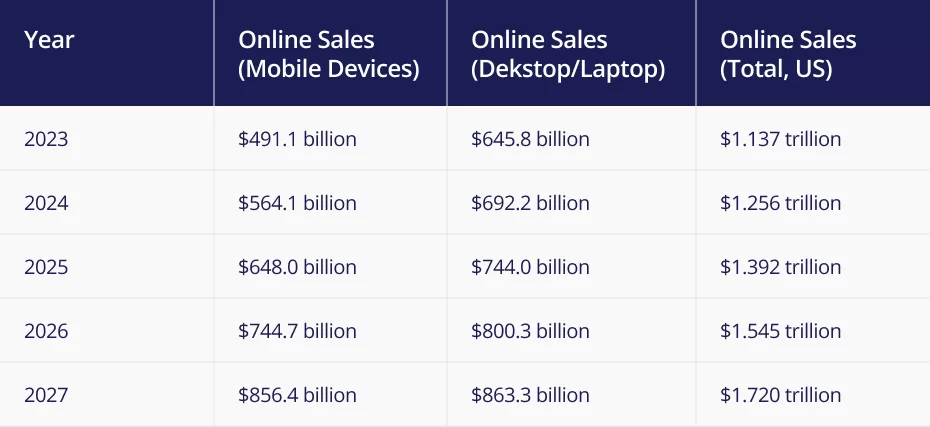
Global e-commerce continues its rapid rise. Worldwide online retail sales are projected to exceed $7.5 trillion by 2025, driven by mobile growth and new technologies. For example, U.S. e-commerce (desktop + mobile) is forecast to jump from about $1.14 trillion in 2023 to $1.72 trillion by 2027, as shown below.
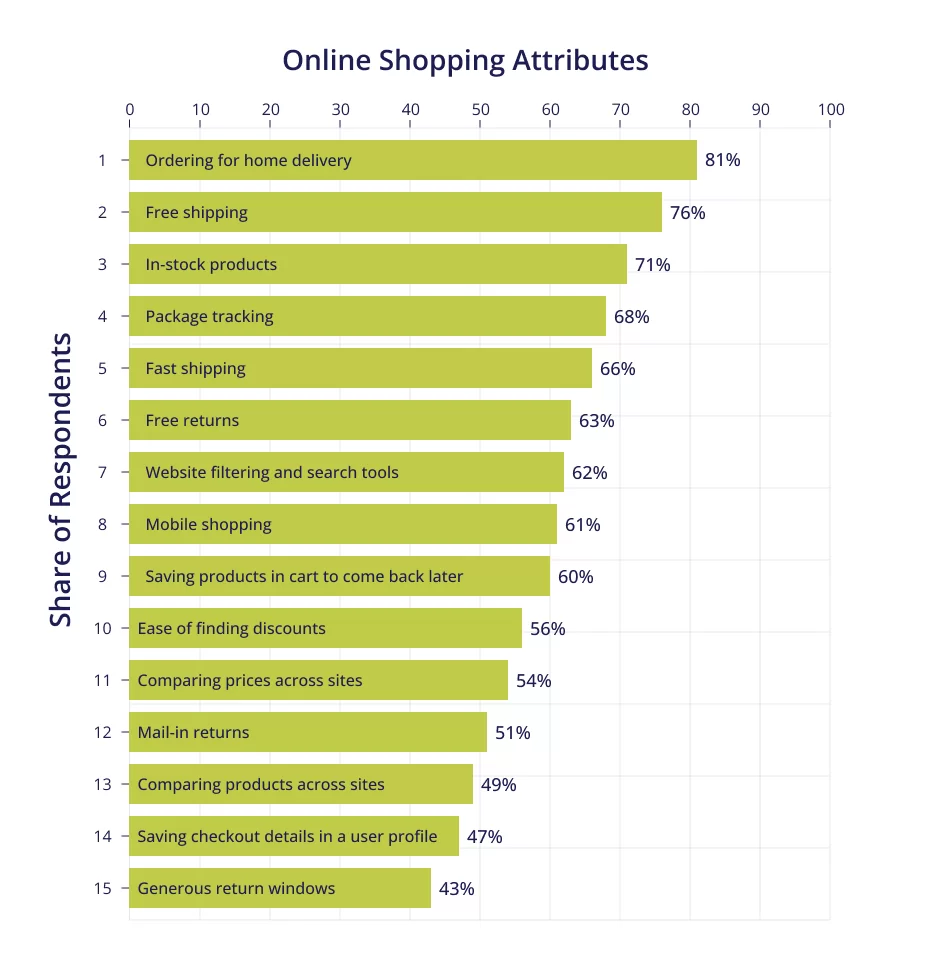
In parallel, consumer expectations are evolving. A recent survey found 81% of online shoppers expect home delivery and 61% prioritize mobile shopping (see chart below). In 2026, developers must meet these demands: seamless mobile apps, fast web experiences, and flexible systems. The trends below illustrate where leading brands are investing their development efforts.
Artificial Intelligence & Machine Learning
AI and ML are transforming e-commerce. Intelligent chatbots, recommendation engines, and personalization engines are now table stakes. The global AI-in-ecommerce market is projected at $16 billion by 2025. Major players are rolling out AI shopping assistants: for example, Amazon’s “Rufus” chatbot (powered by a custom large language model) can answer product questions and may soon autonomously shop for you. This trend extends beyond chat: AI-driven search (AI-enhanced product discovery), fraud detection, and dynamic pricing all improve operational efficiency and customer experience.
Companies harness AI for next-level personalization and automation. Machine learning models analyze customer data to recommend products in real time, predict demand, and automate customer service. As one expert noted, “on the ecommerce side, if agents can find the best possible outcome for me, that’s amazing” – a nod to emerging AI agents. E-commerce developers should therefore integrate AI and ML tools (or APIs) into the stack, enabling smart assistants and predictive features for 2026.
Mobile Commerce & PWAs
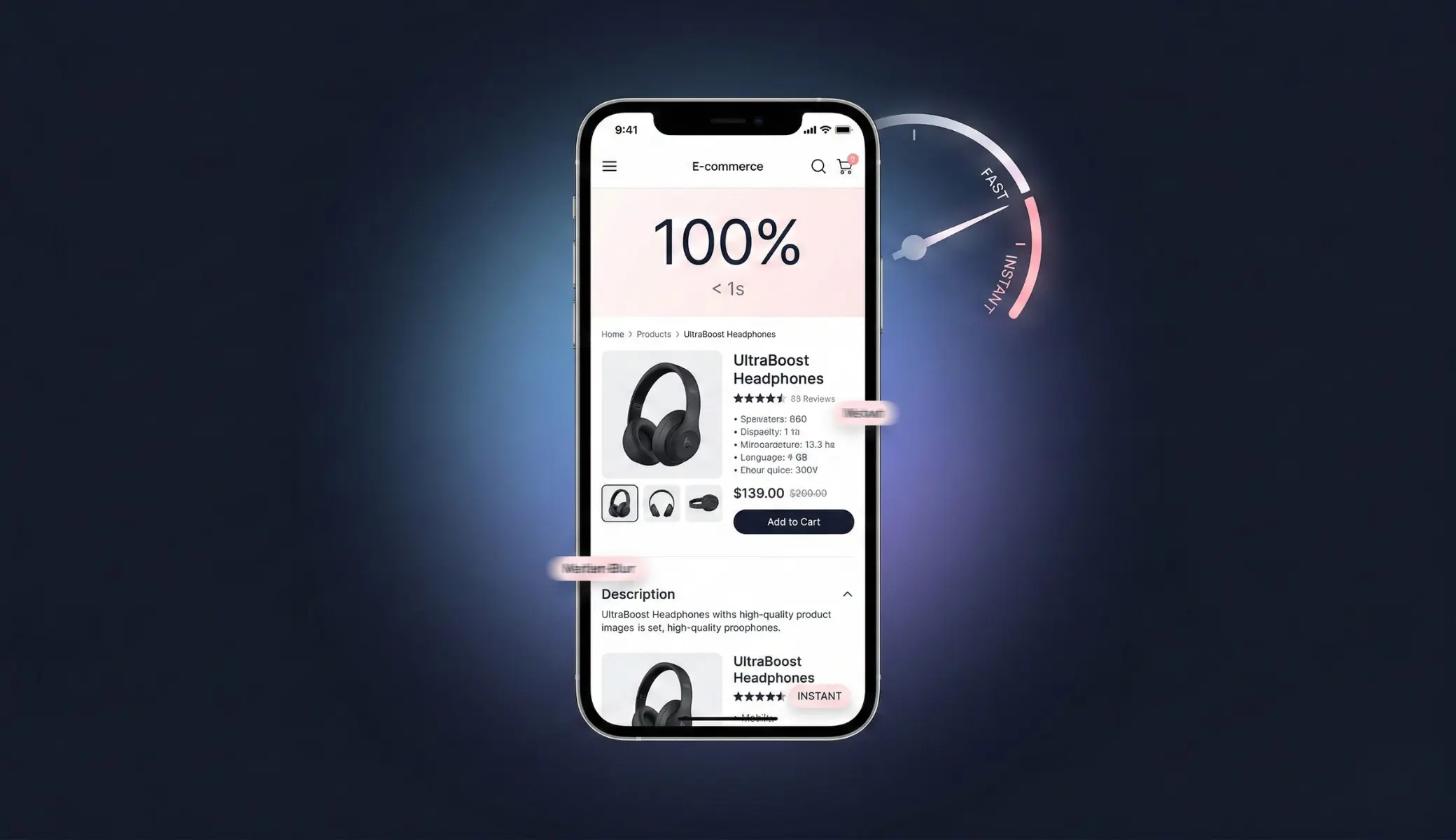
Mobile continues to dominate retail. Surveys show 85% of U.S. mobile shoppers prefer apps over mobile websites, so investing in mobile experiences is crucial. At the same time, Progressive Web Apps (PWAs) are surging: experts expect 65% of businesses to adopt PWAs by 2025, since PWAs offer 2–4× faster load times and about 36% higher mobile conversions. In practice, PWAs combine the reach of the web with app-like performance.
For example, global retailer AliExpress rebuilt its mobile site as a PWA and saw a 104% increase in new-user conversions. Similarly, Flipkart Lite (a PWA) achieved 40% higher re-engagement in markets with slow networks. These gains come from the instant, offline-capable experiences PWAs enable. Developers can implement a PWA by registering a service worker; for instance:
if ('serviceWorker' in navigator) { navigator.serviceWorker.register('/sw.js') .then(() => console.log('Service worker registered')) .catch(err => console.error('SW registration failed:', err)); }
This simple code boots the PWA engine in modern browsers, caching assets and enabling offline support. By 2026, expect most e-commerce front ends to offer either native apps or PWAs (often both) to capture every mobile shopper.
Voice Commerce
Voice interfaces are becoming an important channel. With smart speakers and voice assistants ubiquitous, consumers are growing comfortable “shopping by voice.” Companies like Walmart have introduced voice-driven shopping: e.g. “Walmart Voice Order” lets customers add items to their carts simply by talking to Google Assistant. This frictionless, hands-free ordering is ideal for re-stocks and quick buys (“Hey Google, add paper towels to my Walmart cart”).
By 2026, many users will search and shop using voice: it’s fast and convenient. Brands should prepare by implementing voice-capable search (e.g. using NLP and automatic speech recognition). For example, a store’s backend could accept requests from an Alexa Skill or Google Action API to return product information or complete purchases. As adoption grows, voice-friendly search indexing and cart-adding endpoints will be key features in e-commerce platforms.
Augmented Reality (AR) & Virtual Try-Ons
Immersive technology is closing the gap between online and in-store experiences. AR tools let shoppers “try before they buy.” IKEA’s AR app Place lets users virtually drop true-to-scale 3D furniture into their homes, removing uncertainty and boosting purchase confidence. Likewise, L’Oréal’s ModiFace technology allows customers to try on makeup virtually, increasing satisfaction in categories like beauty where touch is important.

By 2026, expect AR (and VR to a lesser extent) to be standard features in many online stores. Implementation can range from simple SDK integrations (e.g. WebXR and 3D models in JavaScript) to complete AR apps. For example, a JavaScript-based AR solution might use device cameras to overlay product models – greatly reducing return rates. Any lead in AR/VR will help e-commerce brands stand out and reduce purchase hesitation.
Headless & Composable Commerce
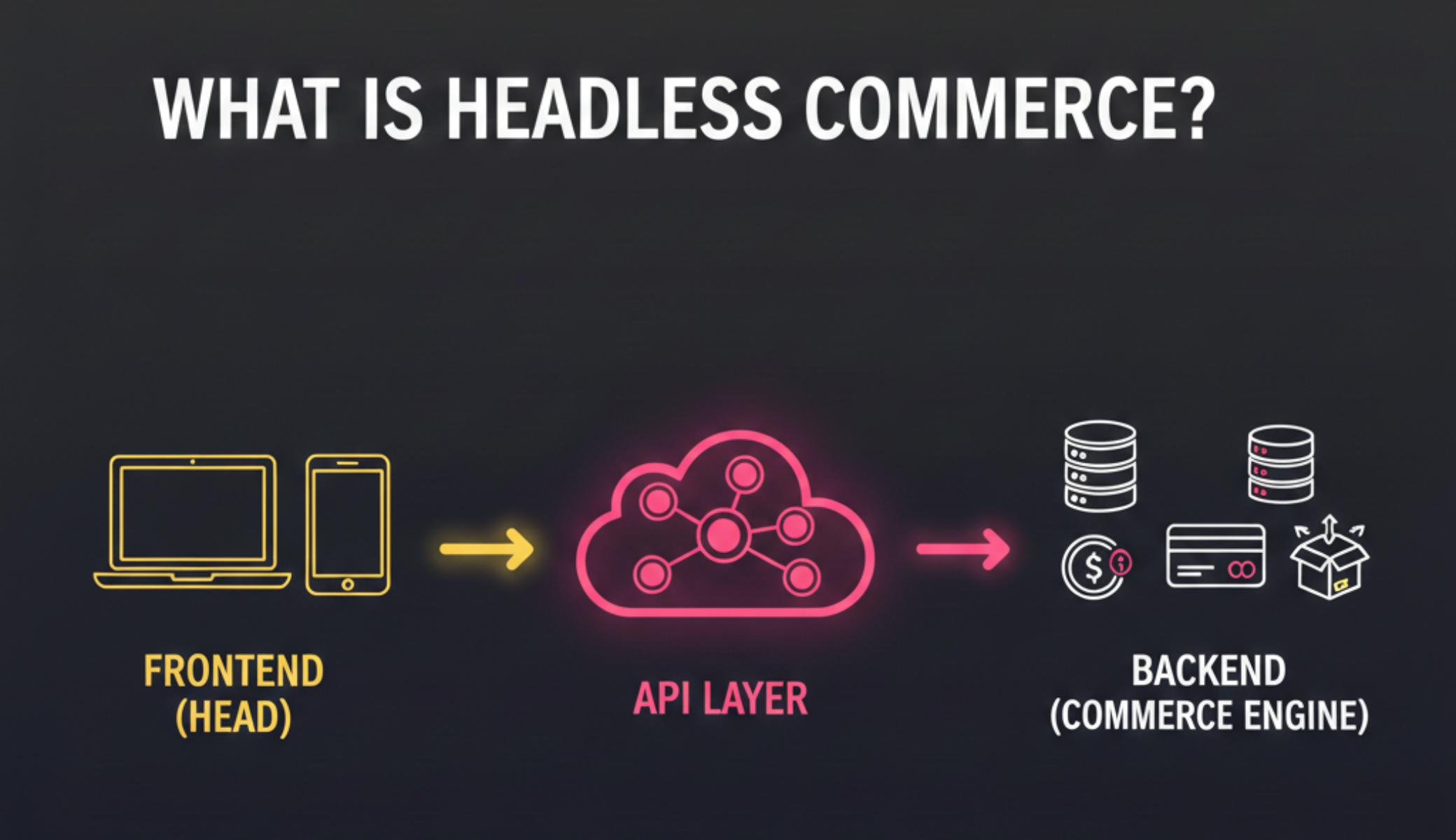
Traditional all-in-one platforms are giving way to headless and composable architectures. In a headless setup, the front end (any UI) is decoupled from the back-end commerce engine (API-driven). This flexibility lets developers swap or upgrade components (search, checkout, CMS, etc.) independently. By 2026, more brands will assemble “best-of-breed” stacks via microservices and APIs. For instance, Coca-Cola adopted composable commerce to quickly launch D2C channels across markets, integrating pre-built services for content, payments, and loyalty.
The takeaway: to stay agile, developers should consider headless approaches. Modern frameworks (Next.js, Shopify Hydrogen, etc.) and headless platforms make this practical. As one analysis notes, headless enables seamless omnichannel experiences while significantly accelerating development cycles.
Social Commerce & Live Shopping
Social media is morphing into a direct sales channel. Consumers now “shop where they scroll.” In 2023, global social commerce sales topped $1.3 trillion and are projected to surpass $8 trillion by 2030. Platforms like TikTok, Instagram and Pinterest are building full in-app shops. For example, TikTok Shop embeds shopping into the feed (product tags in videos), and Instagram Checkout lets users browse and buy without leaving the app.
By 2026, social commerce will be inescapable. E-commerce dev teams must enable product catalog integration with social APIs, support shoppable media, and optimize for viral content. For instance, implementing Instagram’s Shopping API or TikTok’s For You commerce SDK can directly open the buy flow from a social post. Developers should also account for localized experiences, since social commerce features often vary by region.
Payment Innovations and Checkout
Finally, checkout options are diversifying. Buy-Now-Pay-Later (BNPL) and digital wallets (Apple Pay, Google Pay) are increasingly expected. The BNPL market is projected to grow rapidly (estimates suggest it could exceed $500 billion by 2025). Crypto payments and wallets (e.g. PayPal’s crypto support) are also emerging for tech-savvy shoppers. Development teams should integrate multiple payment providers via modular checkout components, ensuring a frictionless experience. For example, using a gateway-agnostic library (like Stripe or Adyen) can allow one-click payments, digital wallets, and BNPL financing all in the same flow. Supporting these options can significantly reduce cart abandonment.
Conclusion & Next Steps
The above trends – AI shopping assistants, mobile/PWA experiences, voice ordering, immersive AR, headless architectures, social integrations, and advanced payments – will shape e-commerce development in 2026. Companies that adapt early will delight customers and capture market share. To implement these trends, work with experienced developers who can integrate AI APIs, build responsive PWAs, and design headless microservices.
If you’re planning your 2026 roadmap, consider partnering with experts who specialize in e-commerce innovation. Contact us for a consultation on AI, mobile apps, AR, or any of these emerging technologies – let’s build the future of online shopping together.